





Comparing two cities is akin to comparing two people. It’s easy on the surface, but when you get down to the important stuff it becomes wildly difficult. How do you compare one road to another when you don’t know who or what has driven over it? Can you really compare I-35W to the Nidos-Smiltynės road without understanding what happened to 35W in 2007 or the number of holidaymakers biking down the Curonian Spit? Can you claim to understand either even if you’ve driven over either countless times?
I’ve walked down the Naujojo Sodo street several times now for work and I’ve walked down SE University Avenue more times than I can remember. But that doesn’t mean I can come close to understanding just what either of these streets fully mean. I wasn’t on University when the I-35W Bridge collapsed. I’ve driven over the new bridge many times and realize every so often crossing the river for class, there was a time when I could have watched that bridge fall. I can say even less about Naujojo Sodo st. Can I, an outsider, find reason to be moved by this street in Lithuania’s port city? If I can, what will I feel? Minneapolis and Klaipeda may not be a world apart, but it can feel that way sometimes.
The Easy Part
How then to begin? To start with base comparison, like I said before, is easy. It’s easy to say that one McDonalds in a town compared with the dozen or so around Minneapolis likely comes as no surprise. It’s a stereotype of the United States that is beyond accurate. As sad as it seems, it is true. There is truly a shocking number of McDonalds both around the Twin Cities (Minneapolis and St. Paul, the capital of Minnesota) and the United States.

Also interesting, to a certain sort of person, is the shocking absence of Starbucks. One of the similarly accurate stereotypes of the United States is that there are so many Starbucks that there are Starbucks built across the street from another Starbucks. While Minneapolis does strike a balance between three different brands, Starbucks, Caribou, and Dunn Bros, the sudden excision of the entire brand is a little shocking. Not that the shock lasted terribly long. The Coffee Inn brand exists prevalently throughout the region which alleviated some of my coffee concerns.
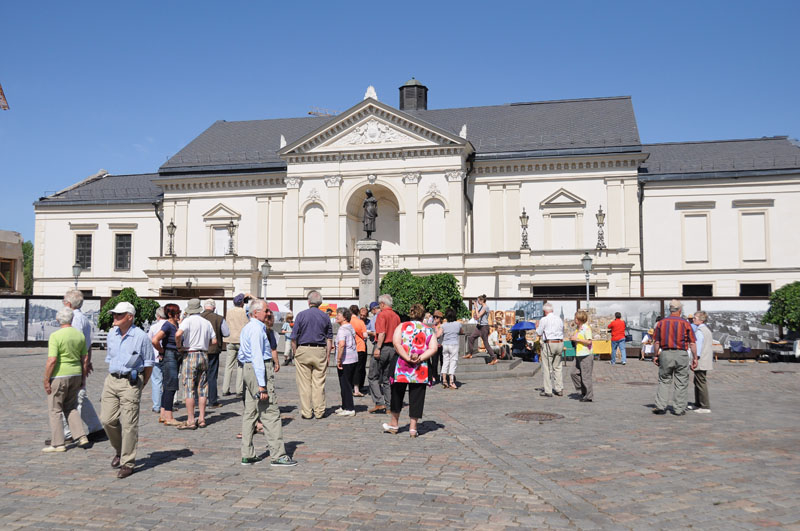
Then there is something as simple as sitting in a restaurant. If there’s one thing that sticks out immensely that separates the U.S. from Klaipeda and Lithuania as a whole is restaurants. There is no one waiting to seat you, you must seat yourself. It’s a simple thing to pick up on, though I did wind up feeling very foolish several times my first days in Lithuania standing stupidly at the door like I was. It’s all very good in theory. The waiters and waitresses shouldn’t be tasked with seating you. The only reason it seems better in theory is that if a waiter or waitress seats you, they know you are there. In Lithuania there it can take some time to get noticed and served. In the long run, some sort of blend would be the pinnacle of restaurant management.
Distance too is a concern. One of my original ideas after arriving in Klaipeda was to rent or buy an inexpensive bike. I ride one frequently in Minneapolis and figured, why not? No reason not to make things simpler and have the chance to extend my traveling range without the need of money for bus fares. Yet when I started wandering around Klaipeda I found surprisingly few points to lock a bike to. At this point I can think of maybe three sets of bike racks I’ve seen in Lithuania, one of which was in Klaipeda.
This utterly staggers me as Minneapolis has literally thousands of bikes. I have one, my neighbor has one, sometimes it seems as though half the students at the university ride bikes. Finding a place to lock your bike in Minneapolis can be harder than parking a car. There are bikes to rent the same way you buy a soda at a street-side vending machine. Connecting the two campuses of the University of Minnesota is a three mile path usable only by the campus buses and bicycles. There are bike paths in Klaipeda to be sure, but nowhere near the distance covered just by the university, much less the rest of the city of Minneapolis. It’s all there in Klaipeda, but in such a smaller way than I’m used to. It’s bizarre transitioning to a city where you don’t look both ways before crossing the sidewalk.
Traffic is nicely similar to the United States. That is to say that no one knows how to drive. It is a law of the universe I cling to beyond all others. No one knows how to drive. I don’t, you don’t, he doesn’t, she doesn’t, they don’t, we don’t. It’s good to know that my policy of universal inability to drive holds true.
The Hard Part
Yet as I said before, all these things are easy to see. They’re simplifications, even over simplifications of the two cities. More importantly is what each city makes you feel. Each person is naturally inherently biased towards their own tastes and beliefs. They will say that certain cities are better or worse based on no real scale they can explain. There’s nothing wrong with this. People are entitled to their opinions wherever they may fall. However, the trick is experiencing differences and holding them up to scrutiny rather than first impressions.
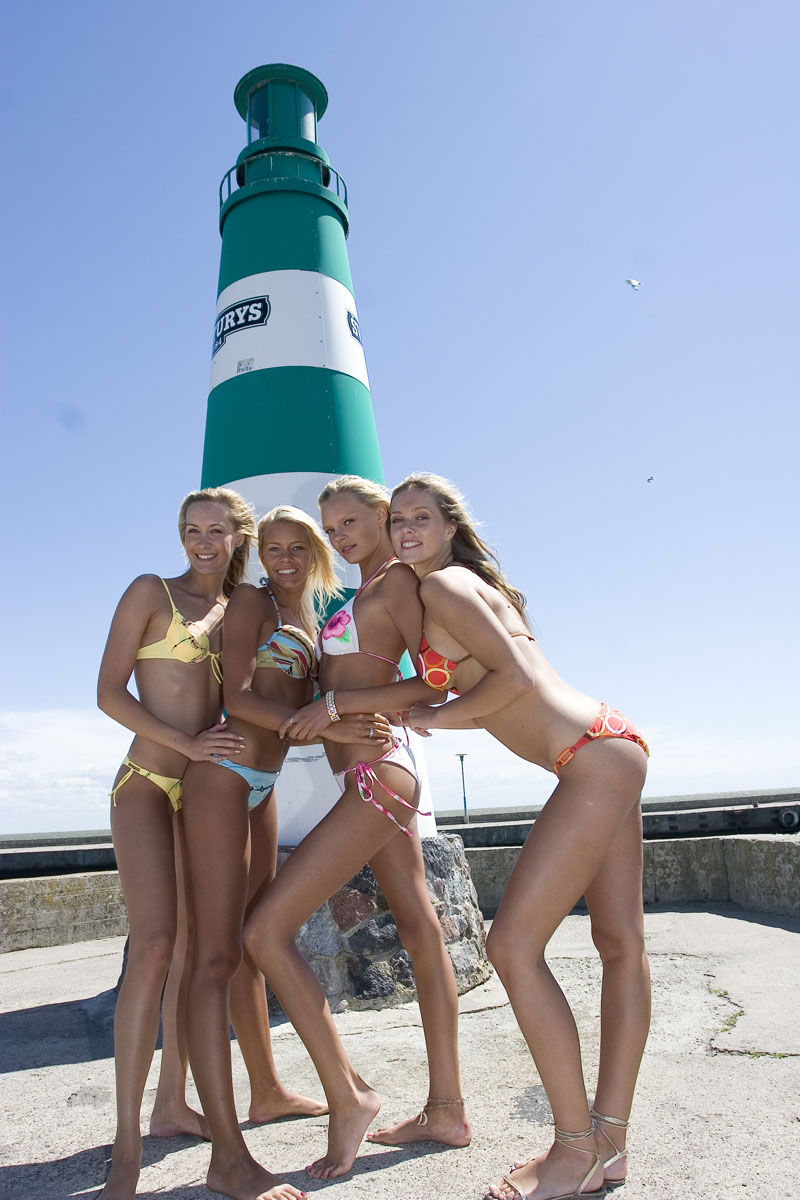
For example, while technically a larger city by area, the population of Minneapolis is roughly twice that of Klaipeda. Regardless, the feel of Klaipeda is close to the same as Minneapolis. Without the University bustling with people, some errors do factors into that. Yet even with twice as many people in roughly half the space, Minneapolis feels no more crowded than Klaipeda. Despite this, Klaipeda feels infinitely larger in scope. This is due to the simple fact that I am out of my depth. Without the faintest idea how to speak the language everything in the city seems a million miles apart. Does this mean I shouldn’t try? No. The second evening I was in Klaipeda was the second day of their famous Sea Festival, as well as Klaipeda’s 760th birthday. I could have just as easily stayed in my apartment watching the Olympics. But I went out and saw it. And though language still proves to be a barrier I am unequipped to tackle, I still enjoyed the sights and sounds of thousands experiencing life.
Conversely, there is the underlying feeling that Minneapolis is simply more busy. There are more people as a fact, that much is true. But it also feels like more. The University of Minnesota is my area of vague expertise it feels as though I could see as many people as I have since coming abroad. Even the massive crowd at the Sea Festival couldn’t make me feel the weight of the people the way I feel in Minneapolis. That weight, that unspecified feeling of people en masse is what makes a place feel full, lively, populated. Without it, it is harder to find and appreciate a sense of place, a sense of being somewhere rather than just visiting.
Saying just how a city makes you feel is a tricky question. Like the comparison question earlier, it is simultaneously easy and incredibly difficult. Sure you can just say a place is nice, or quaint, or pretty, but does that say anything about that place? People who have never been to Venice say it’s pretty, but without experience, can their opinion be trusted?
In the end only the individual can speak for themselves. All I can say is that Klaipeda has been an experience that keeps building on itself every day. Each day has something new, something different to see or do. Deciding what to do next after everything is laid out is the challenge. Realizing what can be done between what should be done and doing it.
Šiuo metu skaitomiausi


Šiuo metu skaitomiausi

Šiuo metu skaitomiausi
Šiuo metu skaitomiausi populiarus


Taip pat skaitykite






Rašyti komentarą